Prof. Yun Liu

Content navigation
About
Distinguished Professor Yun Liu is an internationally recognised leader in materials chemistry and polar functional materials. She received her PhD degree from Xi'an Jiaotong University (1997), China and then held National STA and AIST Fellowships at the National Institute of Advanced Industrial Science and Technology (1998-2001), Japan, before joining ANU in 2001, where she has led a Functional Materials Research Group (FMRG) since 2006. Professor Liu has received prestigious ARC fellowships including the Queen Elizabeth II Fellow (2006-10), Future Fellow (2011-14), and Georgina Sweet Australian Laureate Fellow (2022-). She is a Fellow of the Australian Academy of Technological Sciences & Engineering, the Australian Institute of Physics, and the Royal Australian Chemistry Institute. She has held leadership positions including President of the Australian Neutron Beam Users Group and Chair of RACI's Materials Chemistry Division. She currently chairs the Asian Electroceramics Association and actively serves on various international boards and committees, including IEEE Ultrasonics, Ferroelectrics and Frequency Control Society (UFFC), and the Asia-Oceania Neutron Scattering Association (AONSA), and the Society of Crystallographers in Australia and New Zealand (SCANZ).
Other Affiliations
- ANU Institute for Climate, Energy & Disaster Solutions, ANU
- ARC Centre of Excellence for Carbon Science and Innovation, Program Co-Leader
Research interests
Yun Liu's research encompasses both fundamental and applied dimensions of materials science. Her work in materials chemistry advances multiscale understanding of the relationship of the chemistry (defects), structure and properties of materials. This enables her team to design and discover novel functional materials for diverse applications, including emerging electronics, energy systems, environmental solutions, information and communication technology, big data, quantum computing, AI, and IoT.
Her influential research has revolutionised functional materials design and earned numerous innovation awards. She holds over 40 issued patents—most successfully transferred or licensed to industry—and has published over 320 papers in leading journals including Nature, Science, and Nature Materials.
For Students and Early Career Researchers: Any one with background in materials Chemistry, applied physics, applied mathematics, materials science and engineering, and chemical engineering are welcome to join this team. We have both fundamental and applied research topics to adapt your background.
We employ multiscale structural and functional characterization techniques, to understand materials. This includes X-ray/electron/neutron diffraction and total scattering, multi-fields cryo-AFM and multifunctional environment-controllable AFM. Our research spans various functional materials such as dielectrics, ferroelectrics, piezoelectrics, photovoltaics, photoelectronics, magnetics, multiferroics, superconductors, carbon materials, MOFs, and polymers. These can be ceramics, nanomaterials, thin films, or 2D materials.
Location
Building 137, Sullivans Creek Rd
Publications
Crystal Chemistry
Full Crystallography Database of Materials (FCDM)
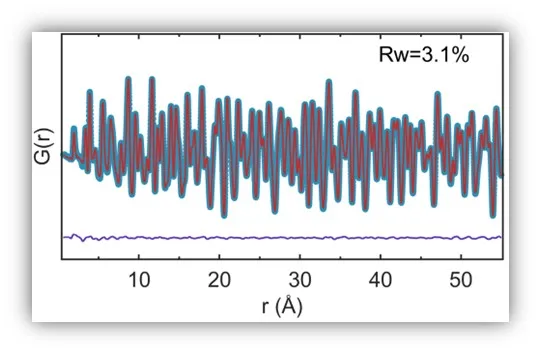
We have established the world-first full crystallography database of materials (FCDM) generated from X-ray/neutron total scattering and Pair Distribution Function. This is an open source, allowing the users to upload your own CIF data (via an input portal and prior-approval) and download FCDM database for your materials study.

Defect Chemistry
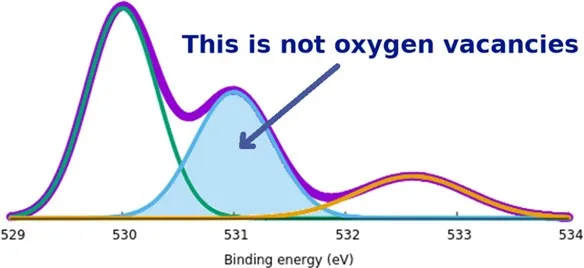
Corrected a half-century misconception in the characterisation of oxygen vacancies - a critical and universal defect in all metal oxide materials. (Chemistry of Materials, https://doi.org/10.1021/acs.chemmater.3c00801)
Polar functional materials and electronic technology
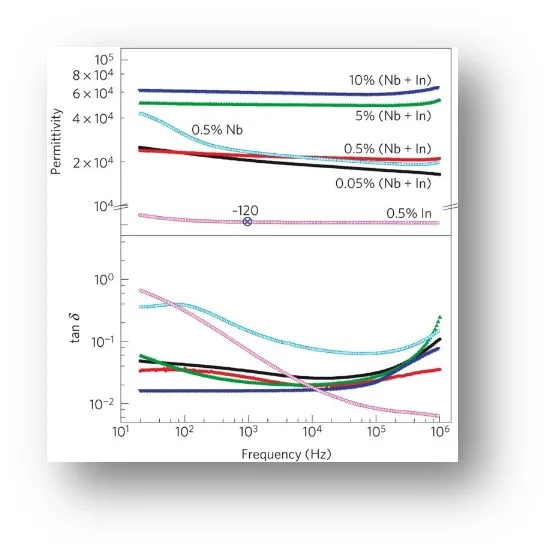
Electron-pinned defect-dipoles for high-performance colossal permittivity materials: the discovery of colossal dielectric materials has created profound impacts on broad materials science and application fields, such as electronic technology and energy storage, including relevant industry. (Nature Materials, https://www.nature.com/articles/nmat3691#Sec7)