
RSC School Seminar - Prof. Begoña Heras
Structural Insights into the Function and Inhibition of Bacterial Virulence Proteins
Speakers
Event series
Content navigation
Description

Structural Insights into the Function and Inhibition of Bacterial Virulence Proteins
Antimicrobial resistance is a critical global health challenge requiring new sustainable solutions. Our research focuses on virulence proteins, the molecular arsenal bacteria use to cause disease. This seminar involves autotransporters, the largest group of secreted virulence proteins in Gram-negative bacteria. Autotransporters drive pathogenesis by promoting biofilm formation, host colonisation, and cytotoxicity. Using structural biology, microbiology and biochemical assays, we have uncovered mechanisms of action of autotransporter adhesins and toxins, revealing how they contribute to bacterial persistence and toxicity. This knowledge is informing the development of approaches that disarm rather than kill bacteria, including our patented biofilm blocker and anti-toxin antibodies.
Biography
Laboratory and co-leads the Infection and Immunity Theme at the La Trobe Institute for Molecular Science, Melbourne. She is an internationally recognised structural biologist and biochemist whose research focuses on the molecular mechanisms bacteria use to cause infection, with the goal of developing antimicrobial strategies that disarm pathogens rather than kill them. Her pioneering work on bacterial virulence proteins has helped establish a new therapeutic paradigm in targeting virulence to combat antimicrobial resistance. She has published more than 85 peer-reviewed papers, delivered over 80 invited and keynote lectures worldwide, and attracted more than $11 million in competitive funding from national, international, and industry/philanthropic sources. Beyond her research, Professor Heras is deeply committed to mentoring and scientific leadership. She currently serves as Chair of the SCANZ Education Committee, is a member of the Victorian Infection & Immunity Executive Committee, and sits on the ARC College of Experts.
Location
Building 138, Level 3, Seminar Room 3.105
Upcoming events in this series
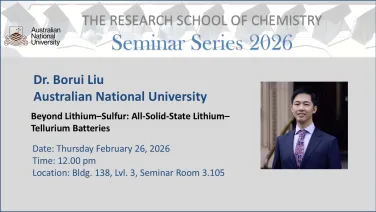
Beyond Lithium-Sulfur: All-Solid-State Lithium-Tellurium Batteries